

You adjust your posture, shift in your seat, and subtly stretch your wrists under the desk. You’re not just fidgeting—you’re responding to your body’s early warning system. That ache in your tailbone, the tingle in your fingers, the dull throb in your lower back after hours of sitting aren’t just “part of the job.” They are signals of excessive pressure building in specific, vulnerable areas of your body. This article will highlight some ergonomic chairs and saddle stools to tackle pain.
These pressure points are more than momentary discomforts; they are precursors to chronic injuries like carpal tunnel syndrome, sciatica, and debilitating back pain. The good news? You can play defense. By strategically deploying ergonomic products designed as “pressure point police,” you can redistribute force, support vulnerable joints, and prevent these minor complaints from escalating into major issues.
This guide targets the three most common pressure zones for desk workers and provides the tactical gear to defend them.
Top Rated

“The office chair’s 5 ergonomic adjustment settings will help you find the most comfortable sitting position when sitting for long periods…”

“You can adjust lumbar support height and depth; headrest height and angle; armrest height, angle, forward & backward; seat cushion height; tilting angle up to 130°and rocking resilience..

“Features adjustable headrests, 4D armrests, adjustable lumbar support and height, 4-position tilt lock, and sliding seat, are all included in one chair..”

“The backrest of the novilla computer office chair is designed according to the shape of a whale’s tail, and the backrest is close to the lumbar line to reasonably distribute the pressure from the lumbar area..”
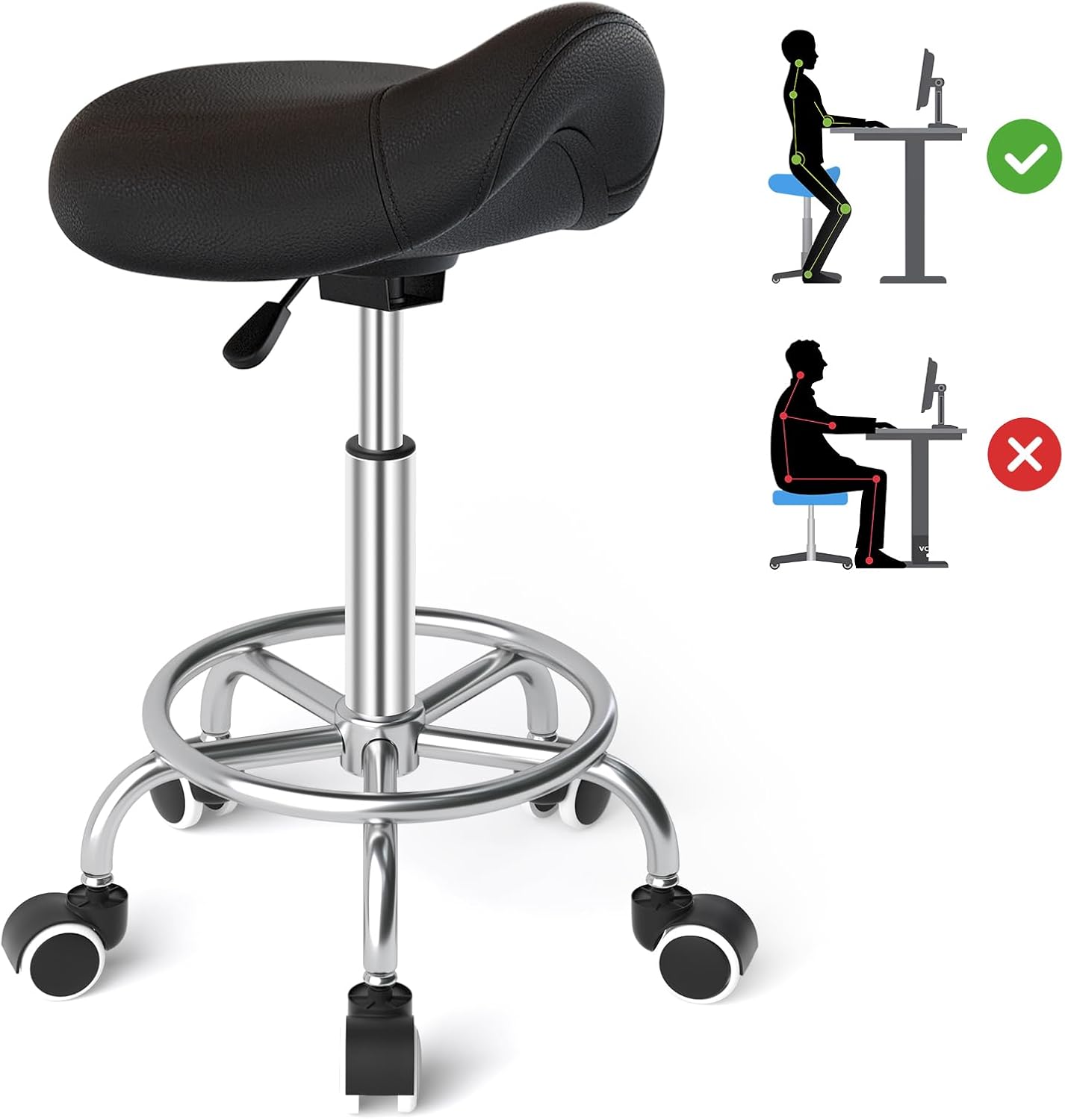
“The saddle-shaped cushion reduces the pressure accumulated in the buttocks and legs, maximizing body’s core muscle strength, adjusting the natural curvature of the spine..”
Your Pressure Point Defense Toolkit
| Pressure Zone | Common Injury Risk | Ergonomic Defense Strategy | Top Product Picks |
|---|---|---|---|
| Tailbone & Hips | Coccydynia (tailbone pain), poor circulation, sciatica flare-ups. | Seat shaping & weight distribution. | SIHOO M18 (W-Shaped Seat) / Ticova (W-Shaped Foam) |
| Elbows, Shoulders & Wrists | Carpal Tunnel, shoulder impingement, tendonitis. | Floating arm support & neutral wrist alignment. | COLAMY (4D Flip-Up Arms) / Novilla (3D Armrests) |
| Legs & Lower Back | Swelling, deep vein stress, increased lumbar disc pressure. | Foot support & elevation to stabilize posture. | YEEZEE Stool (Ring Footrest) / Dedicated Desk Footrest |
1. Zone Defense: The Tailbone & Hips
Sitting concentrates up to 75% of your body weight on a small area just 8% of your body’s surface. A flat, hard seat directs this force straight onto your ischial tuberosities (“sitting bones”) and, if you slouch, your tailbone (coccyx).

- The Risk: Constant pressure can inflame the tailbone (coccydynia), compress the sciatic nerve (leading to radiating leg pain), and restrict blood flow to your lower body.
- The Ergonomic Defense: The Contoured, “W-Shaped” Seat.
This design is engineered to redistribute weight. The raised central groove and curved sides gently cradle your sitting bones, preventing them from flattening and spreading, while ensuring your tailbone is suspended in a pressure-free space. - The Top Defenders:
- The SIHOO M18: Features a pronounced W-shaped padded seat that actively encourages a centered, balanced sitting position to distribute weight evenly.
- The Ticova Ergonomic Chair: Uses a thick, high-density foam cushion in a W-shape combined with a waterfall edge. This not only protects the tailbone but also reduces pressure on the backs of your thighs, crucial for maintaining healthy circulation.
> > Protect Your Foundation with the SIHOO M18 Chair
2. Zone Defense: The Elbows, Shoulders & Wrists
When your arms aren’t supported, the weight of your limbs and the strain of typing are borne by a delicate network of muscles and tendons in your shoulders, elbows, and wrists. This leads to awkward angles and static muscle contraction.

- The Risk: Repetitive strain on the median nerve in the wrist leads to Carpal Tunnel Syndrome. Unsupported shoulders can cause rotator cuff strain and impingement. “Mouse shoulder” is a real, painful condition.
- The Ergonomic Defense: Fully Adjustable (3D/4D) Armrests.
The goal is to have your elbows bent at ~90 degrees with your forearms parallel to the floor and your wrists in a neutral, straight position. Only multi-dimensional armrests can achieve this for every unique body and desk setup. - The Top Defenders:
- The COLAMY Ergonomic Chair: Offers 4D Armrests—they adjust up/down, forward/back, in/out (width), and pivot. This lets you create a perfect “landing pad” for your elbows that keeps your shoulders relaxed and your wrists straight while typing.
- The Novilla Mesh Chair: Equipped with precise 3D armrests that slide, pivot, and adjust in height, providing that critical, customizable support to unload your shoulders and arms.
> > Defend Your Upper Body with the COLAMY 4D Armrest Chair
3. Zone Defense: The Legs & Lower Back
Dangling feet or incorrect chair height create a chain reaction of poor posture. Your thighs compress, reducing circulation, and your pelvis tucks under, flattening your lumbar spine and increasing disc pressure.

- The Risk: Leg swelling, numbness, and a heightened risk of deep vein thrombosis (DVT) from poor circulation. In the back, it leads to disc compression and ligament strain in the lumbar region.
- The Ergonomic Defense: Foot Support & Elevation.
A platform stabilizes your entire posture. It allows for slight leg movement to activate calf muscles (your “second heart” for circulation) and enables you to sit back fully so the chair’s lumbar support can do its job. - The Top Defenders:
- The YEEZEE Saddle Stool: Comes with a built-in, adjustable ring footrest. This is ideal for perching at higher heights (at a standing desk or counter) and allows you to frequently change foot positions to keep blood moving.
- A Dedicated Desk Footrest: For a standard chair, a standalone, tilting footrest is a low-cost, high-impact solution. It encourages dynamic leg movement and helps you find the exact height to reduce pressure on your thighs and lower back.
> > Stabilize Your Posture with a Dedicated Footrest
Building Your Complete Defense System
A holistic approach is most effective. Imagine a day where:
- You sit in a SIHOO M18, its W-seat cradling your hips.
- Your elbows are perfectly supported on the COLAMY’s 4D armrests, keeping your shoulders down.
- Your feet rest gently on a tilting footrest, allowing you to rock slightly and engage your calves.
This setup doesn’t just react to pain—it prevents it from occurring in the first place.
Frequently Asked Questions
Q: I already have a good chair. Do I still need a footrest?
A: Potentially, yes. If your feet don’t rest flat on the floor with your knees at a 90-degree angle and thighs parallel to the ground, a footrest is essential to complete the postural triangle and take pressure off your lower back, regardless of your chair’s quality.
Q: What’s the difference between 3D and 4D armrests?
A: 3D armrests adjust in height, slide forward/back, and pivot side-to-side. 4D armrests add a fourth adjustment: moving the arm pads inward and outward (width adjustment). This is crucial for people with narrower or broader shoulders to achieve perfect alignment without slouching or splaying their arms.
Q: Can a W-shaped seat feel uncomfortable at first?
A: It can feel different if you’re used to a flat seat. It’s not about plush softness, but about structured support. Give your body a few days to adjust to being held in a more anatomically neutral position. The relief from tailbone and thigh pressure typically becomes very apparent.
Q: Are these solutions helpful for existing pain, or just prevention?
A: They are powerful for both. For existing pain, they help remove the aggravating mechanical stress, allowing tissues to heal. For prevention, they correct the faulty mechanics that lead to injury. Always consult a healthcare professional for a diagnosis of existing conditions.
Final Verdict: An Ounce of Prevention
Waiting for pain to become a problem before you act is a losing strategy. The “Pressure Point Police” approach is about proactive, intelligent defense. By investing in a contoured seat, fully adjustable armrests, and stable foot support, you’re not just buying accessories—you’re funding a long-term insurance policy for your musculoskeletal health.
Target these three critical zones, and you’ll do more than just get through the workday comfortably. You’ll protect your ability to work, create, and live without pain for years to come. Your future self will thank you for the defense you put in place today.
Ready to patrol your pressure points? Click the links above to explore the ergonomic defenders that will keep pain at bay and your body functioning at its best.

